
SensComp News

Applications Where Electrostatic Ultrasonic Sensors Outperform Piezoelectric Sensors

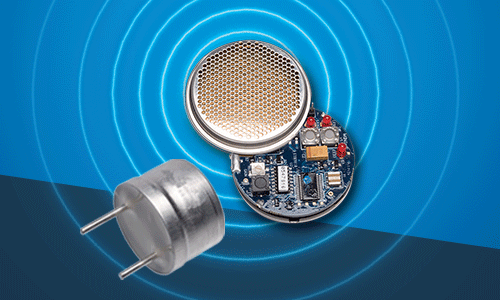
Electrostatic ultrasonic sensors and transducers deliver performance advantages that piezoelectric sensors cannot match—particularly in applications that require long range, soft-target detection, small-object recognition, or stable operation across temperature changes. By leveraging a lightweight electrostatic membrane rather than a heavy ceramic disk, these sensors achieve up to 40 dB higher sensitivity, and maintain consistent performance in conditions […]

Applications Where Electrostatic Ultrasonic Sensors Outperform Piezoelectric Sensors Read Post »

Electrostatic Ultrasonic Sensors vs. Piezo Sensors: Which One is Better for My Application?

When most engineers think about in-air ultrasonic sensing, they picture a cheap, ceramic “hockey puck” — a piezoelectric transducer. But piezo is not the only option, and not always the right choice. Electrostatic ultrasonic sensors use a different transduction mechanism that delivers higher sensitivity, wider bandwidth, and more stable performance in demanding in-air applications. How

Electrostatic Ultrasonic Sensors vs. Piezo Sensors: Which One is Better for My Application? Read Post »

Benefits of SensComp Electrostatic Transducers

Electrostatic devices have a higher sensitivity and bandwidth than piezoelectric devices. Electrostatic devices have a relatively flat response over a wide frequency range, and because they are non-resonant, have very low ring-out characteristics. Such devices are more sensitive than their piezo counterparts, typically by 40 dB or better. The increased sensitivity translates into longer-range capabilities

Benefits of SensComp Electrostatic Transducers Read Post »

Shopping Cart
Scroll to Top