Technology

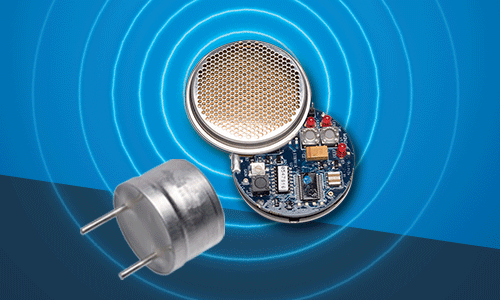
Electrostatic ultrasonic sensors using, multifrequency operation in a noisy environment.

How Multifrequency Operation Reduces False Ultrasonic Sensor Readings in Noisy Environments

Ultrasonic sensors can misfire in acoustically noisy environments, reporting obstacles that aren’t there when air brakes, machinery, whistles, or even animals put stray ultrasonic energy into the air. One effective way to reject that noise is multifrequency operation: transmitting a short stepped chirp of several frequencies as a unique signature, then accepting only the echo […]

How Multifrequency Operation Reduces False Ultrasonic Sensor Readings in Noisy Environments Read Post »

Image of a SensComp electrostatic ultrasonic sensor next to a piezoelectric ultrasonic sensor.

Applications Where Electrostatic Ultrasonic Sensors Outperform Piezoelectric Sensors

Engineers evaluating ultrasonic sensors usually start in the generic category and assume every ultrasonic device performs about the same. They do not. Electrostatic ultrasonic sensors have approximately 40 dB greater sensitivity than comparable piezoelectric ultrasonic sensors, and that margin changes what the sensor can actually do in the field: longer usable range, reliable returns off small and soft targets, and stable readings as temperature swings. This post covers the specific applications where that difference is decisive, and why piezoelectric ultrasonic sensors may fall short in each.

Applications Where Electrostatic Ultrasonic Sensors Outperform Piezoelectric Sensors Read Post »

Shopping Cart
Scroll to Top