
Accurate Non-contact Level Measurement in Tanks, Bins, and Basins
Level measurement challenges any ultrasonic sensor that needs a strong, clean echo. Product surfaces are dusty, foaming, uneven, or acoustically absorptive, fill heights swing from nearly empty to within a foot of the sensor, and outdoor vessels cycle through seasonal extremes. Piezoelectric ultrasonic sensors lose the weak returns and drift as conditions change. SensComp’s electrostatic ultrasonic transducers have approximately 40 dB greater receive sensitivity and cover 1 inch to over 40 feet with appropriate drive electronics, so one sensor reads a full vessel range and holds it from -40°C to +85°C.
Some of the ways electrostatic ultrasonic sensing supports level detection and control:
- Liquid tank level monitoring
- Grain bin & silo level sensing
- Water treatment systems
- Snow depth measurement

Liquid tank level monitoring
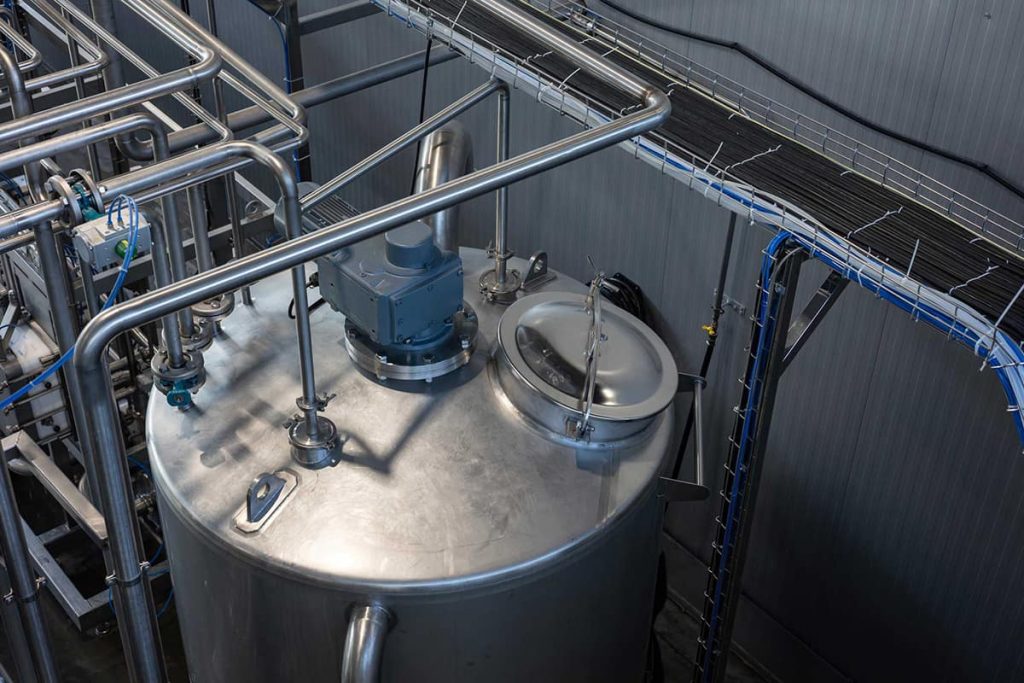
Few plants run just one tank size. A shallow day tank and a tall storage vessel need the same measurement, and most sites solve that with two sensor part numbers. A single SensComp electrostatic ultrasonic transducer covers 1 inch to over 40 feet with appropriate drive electronics, so the same hardware reads both. A calm, reflective liquid is a target most ultrasonic sensors handle, but the higher sensitivity of an electrostatic ultrasonic transducer extends the usable range on that surface, and holds the reading when a tank carries water one week and slurry the next. Consolidating on one transducer cuts the spare parts, calibration routines, and integration work a plant carries.
Grain bin & silo level sensing
A near-full silo is the hardest reading to take. The product surface climbs to within a foot or two of the sensor, and a piezoelectric ultrasonic transducer rings after transmit, masking echoes inside roughly 13 to 14 inches. SensComp’s electrostatic ultrasonic transducers use a low-resonant membrane that settles quickly, so with appropriate drive electronics they keep reading to within 1 inch of the face. Lower down, bulk solids settle into a cone whose small, soft peak returns an echo too weak for a low-sensitivity sensor, which is why a full bin reads empty. Dust and an uneven surface weaken it further, and the transducer still reads it, so the full span stays measurable.

Water treatment systems
Clarifiers, wet wells, and chemical feed tanks sit outdoors and run year-round. A sensor set up in October has to read the same way in January, and piezoelectric ultrasonic sensors drift in frequency and gain as the air temperature swings. SensComp’s electrostatic ultrasonic transducers stay frequency- and gain-stable from -40°C to +85°C, so level readings hold across seasons without a recalibration visit. The measurement stays non-contact, so nothing wetted needs cleaning, and Environmental Grade transducers add a 304 stainless-steel housing with an optional parylene conformal coating that resists moisture and chemical exposure with minimal dampening of acoustic sensitivity.

Foam, turbulence & narrow tanks
Not every tank offers a clean surface. A foam layer absorbs the pulse instead of reflecting it, agitated or filling liquid scatters the return, and a narrow vessel bounces the pulse off its sidewalls before it comes back, producing a distance that does not match the real level. The broadband pulse from a SensComp electrostatic ultrasonic transducer carries more acoustic detail about what it struck, which helps the system separate a valid surface echo from foam, wall reflections, and noise. With roughly 40 dB greater receive sensitivity behind it, a center-mounted sensor holds a reading where a narrowband piezoelectric ultrasonic sensor reports a false level or drops out entirely.

Snow depth measurement
Snow is close to the worst acoustic target there is — light, porous, and highly absorptive, so most of the transmitted energy never comes back. SensComp’s electrostatic ultrasonic transducers have approximately 40 dB greater receive sensitivity than piezoelectric ultrasonic transducers, which is what makes that faint return readable at all. Running at a 50 kHz drive frequency and mounted 1 to 10 meters above bare ground, they resolve snow depth to 5 mm and separate an ice crust from the loose snow beneath it. Weather stations, avalanche monitoring, ski areas, and hydrology networks run them unattended through a season instead of sending a technician to read a stake.


Additional Resources

ARTICLE
Level Sensing on Reflective and Soft Surface Targets:TheEngineer’s Guide to Agricultural Sensing➔

Ultrasonic Level Sensor: FAQs
Non-level targets often scatter or absorb sound instead of reflecting a clean pulse back. Foam, dust clouds, condensation, and an uneven pile surface all weaken the return, and a piezoelectric ultrasonic sensor that needs a strong echo reports a stale value or no reading at all. SensComp’s electrostatic ultrasonic transducers have approximately 40 dB greater receive sensitivity than piezoelectric ultrasonic transducers, so they resolve the weak signals those conditions produce. The result is a continuous level reading in vessels where conventional ultrasonic sensors read intermittently.
Every ultrasonic sensor has a blind zone near its face, set by how long the transducer keeps ringing after it transmits. A piezoelectric ultrasonic transducer’s ceramic element keeps ringing well after the pulse ends, masking echoes inside roughly 13 to 14 inches. SensComp’s electrostatic ultrasonic transducers use a low-resonant membrane that settles quickly, so with appropriate drive electronics they keep measuring to within 1 inch of the face. The top of a tank or silo stays readable well past the point where a longer ring-down gives it up.
It can. A foam layer absorbs acoustic energy rather than reflecting it cleanly, so a lower-sensitivity sensor either locks onto the foam or loses the return altogether. SensComp’s electrostatic ultrasonic transducers have approximately 40 dB greater receive sensitivity than piezoelectric ultrasonic transducers, and their broadband pulse carries more detail about the surface that returned it. Together those make it easier to resolve a valid echo where a foam layer sits above the liquid, though heavy persistent foam is worth testing against your actual process conditions.
In a narrow vessel the transmitted pulse can bounce off the sidewalls before it returns, so the sensor times a longer path and reports a level that does not match the real one. Center-mounting the sensor over the tank is the first correction, since it keeps the beam away from the walls. A focused 15-degree beam pattern helps as well, and the broadband pulse of a SensComp electrostatic ultrasonic transducer gives the system more information for separating a wall reflection from the true surface echo.
Yes, provided you separate two effects. Many piezoelectric ultrasonic sensors drift as the ceramic element warms and cools, so a reading set up in mild weather is wrong in January. SensComp’s electrostatic ultrasonic transducers stay frequency- and gain-stable from -40°C to +85°C, so the sensor itself does not drift. The speed of sound in air still changes with temperature, which affects any time-of-flight measurement, so accurate installations add a co-located temperature input as a fixed correction rather than chasing a drifting sensor.
A single SensComp electrostatic ultrasonic transducer covers roughly 1 inch to over 40 feet with appropriate drive electronics. That close-in figure is unusual for an ultrasonic sensor, and it comes from the low-resonant membrane, which settles fast enough to hear an echo from just past the face. The span means one transducer can serve a shallow day tank and a tall storage silo on the same site, so a plant carries one part number instead of several. Piezoelectric ultrasonic sensors typically cover a narrower band, which is why mixed vessel sizes often end up with mixed hardware.
Snow is one of the most acoustically absorptive targets in outdoor sensing, so most of the transmitted energy is lost rather than reflected. SensComp’s electrostatic ultrasonic transducers have approximately 40 dB greater receive sensitivity than piezoelectric ultrasonic transducers, which is what makes the faint return usable. Field-deployed stations commonly achieve 5 mm resolution at a 50 kHz drive frequency, over mounting heights of roughly 1 to 10 meters. That supports road maintenance decisions, ski area reporting, and hydrology networks logging accumulation through a storm.