
Reliable sensing for detecting people, vehicles, and objects in automated environments
Ultrasonic sensors for presence detection have to register targets that are easy to miss: sleek vehicles that deflect sound, people in soft clothing, and trailers backing into a dock in the dark. Cameras and optical sensors depend on lighting and surface finish, and piezoelectric ultrasonic sensors often lose the faint return from angled or absorptive targets. SensComp’s electrostatic ultrasonic sensors have approximately 40 dB greater receive sensitivity than piezoelectric ultrasonic sensors, and they measure from 1 inch to over 40 feet with appropriate drive electronics. Because they report presence and distance rather than images, they also keep cameras out of lobbies, lanes, and clinics.
Some of the ways electrostatic ultrasonic sensing supports presence detection:
- Automatic gates & parking systems
- Drive-thrus & toll lanes
- Patient presence & health screening kiosks
- Loading dock monitoring

Automatic gates & parking systems
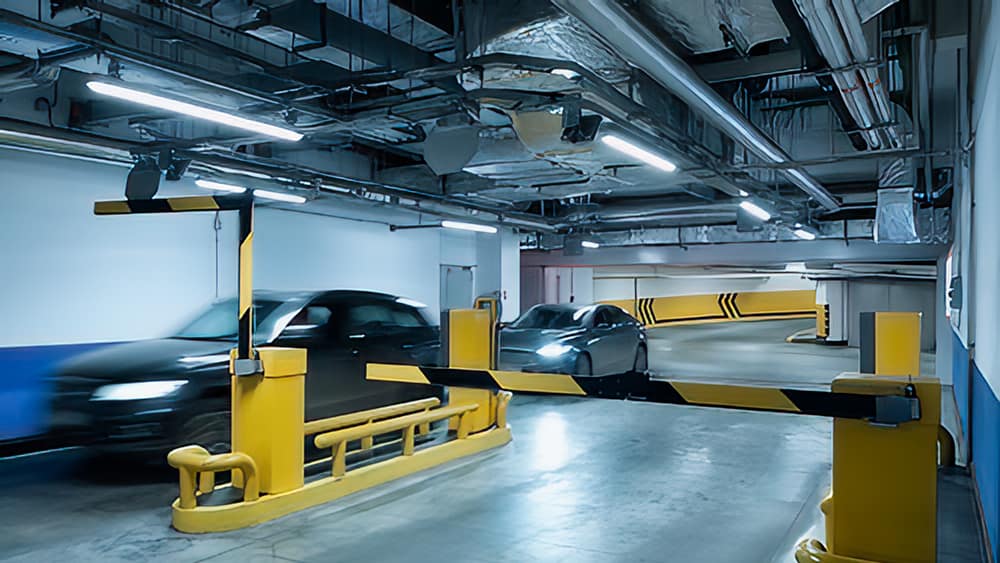
A gate arm or parking barrier has one job when a vehicle pulls up: know it’s there, and stay open until it’s cleared. Modern vehicles make that harder than it sounds. Sloped hoods, raked windshields, and curved roofs deflect much of an ultrasonic pulse away from the sensor, so a low-sensitivity sensor can read a sleek, low-slung sedan as an empty lane.
SensComp’s electrostatic ultrasonic transducers have approximately 40 dB greater receive sensitivity than piezoelectric ultrasonic transducers, enough to resolve the faint, scattered return off an angled body panel or windshield. That margin is the difference between a barrier that lifts on cue and one that stays down — or lowers too soon.
Self-service kiosks
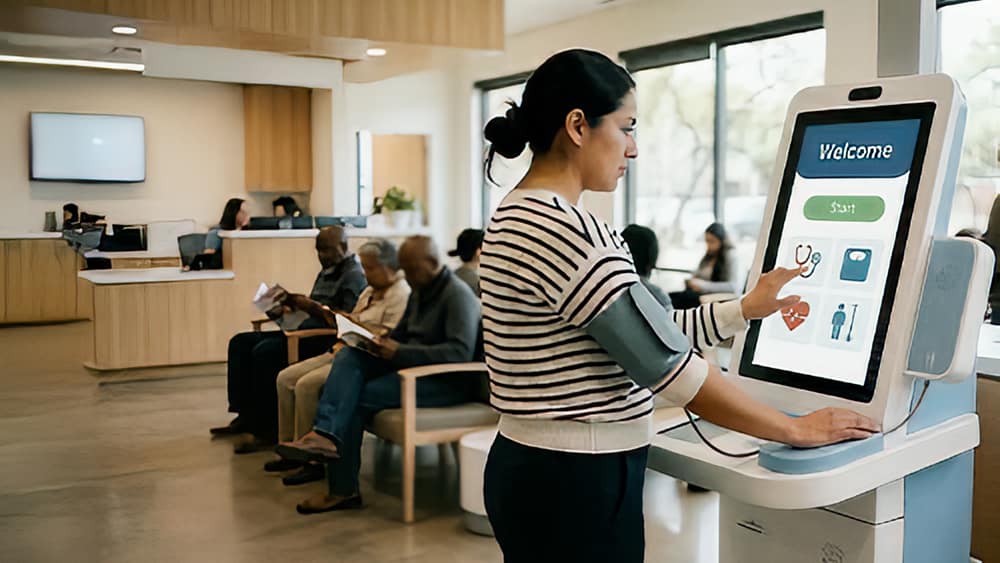
A self-service kiosk measures vitals from a few inches to a few feet away, and everything it does starts with knowing a patient is actually standing there. People are soft, absorptive targets, and the ring-out of a piezoelectric ultrasonic transducer can mask echoes inside roughly 13 to 14 inches — right where a patient naturally leans in to read the screen.
SensComp’s electrostatic ultrasonic transducers use a low-resonant membrane that settles quickly after each transmit pulse, supporting detection from about 1 inch with appropriate drive electronics. A single transducer can follow the patient from the approach to the screen, with no second sensor needed to cover the close-range zone.
Drive-thrus & toll lanes
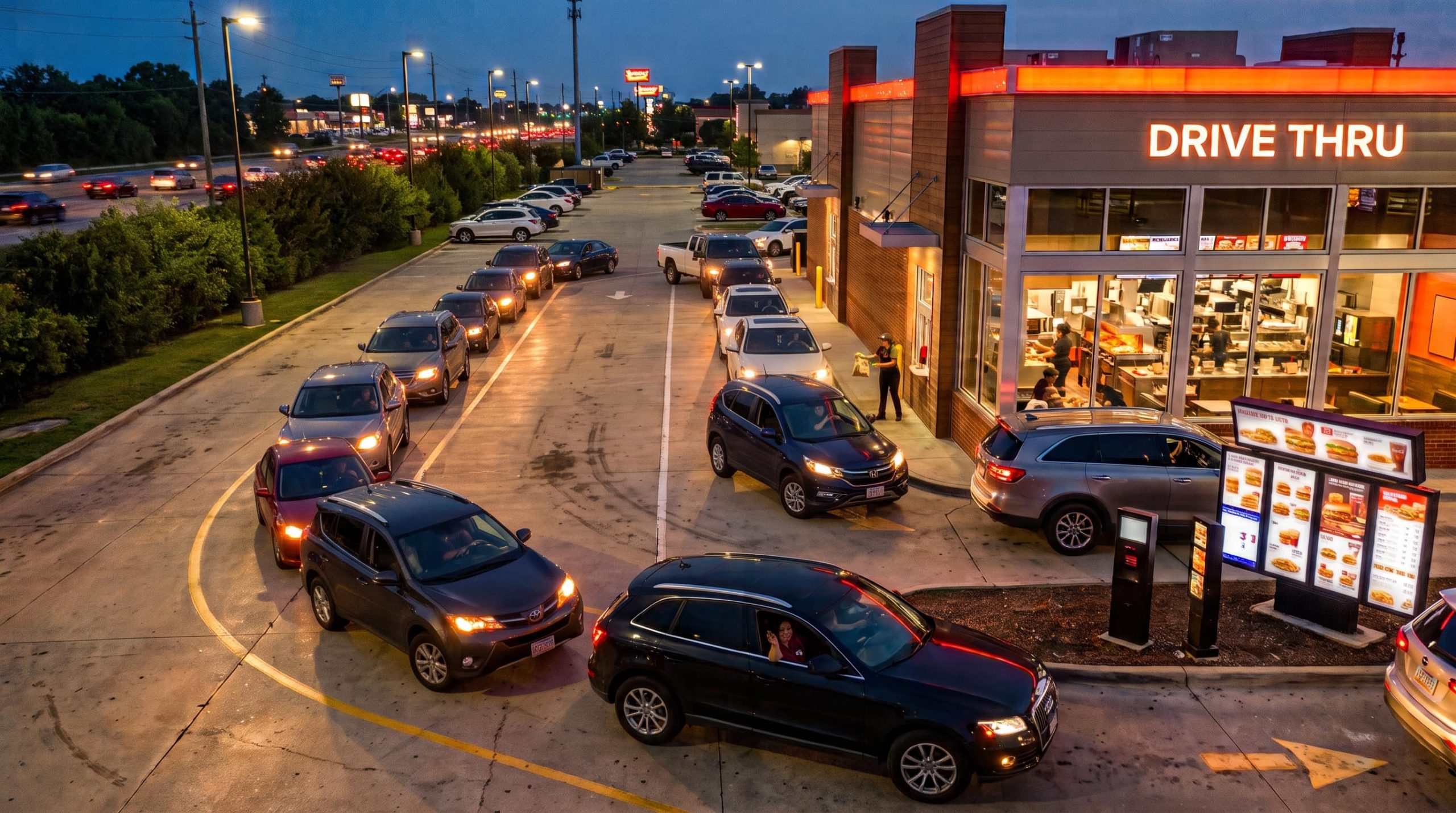
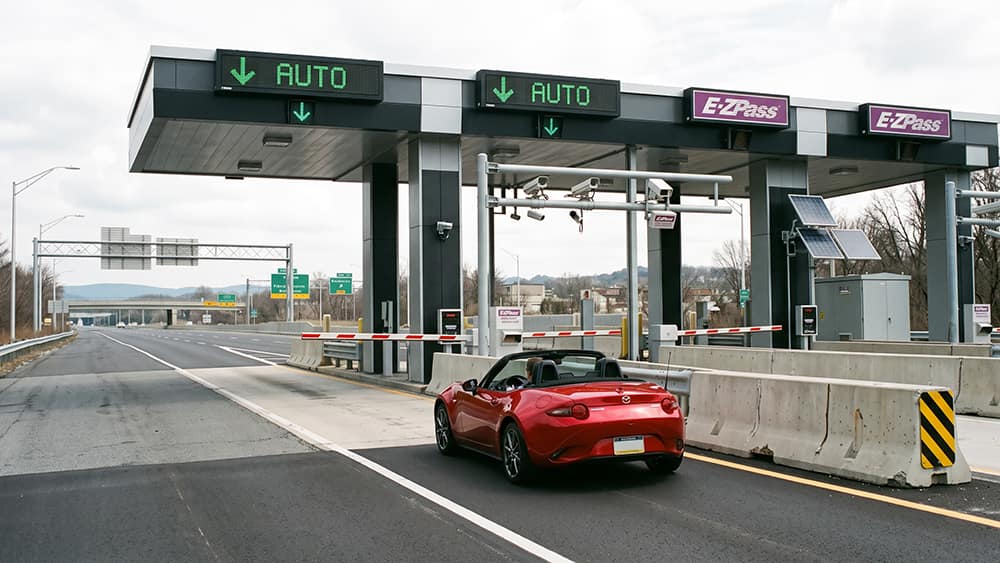
Drive-thru lanes and toll plazas put sensors side by side, surrounded by idling engines, air brakes, and the pulses from the next lane over. A sensor that can’t tell its own echo from a neighbor’s pulse reports phantom vehicles, misses transactions, and lets traffic counts drift .
SensComp’s electrostatic ultrasonic transducers are broadband — roughly 20 kHz to 100 kHz — which supports stepped multifrequency operation: each lane transmits its own short sequence of frequencies and accepts only echoes carrying it. Piezoelectric ultrasonic transducers work in a narrow band around one resonant frequency, with far less room to separate one lane from the next.
Loading dock monitoring
Dock sensors confirm a trailer is in position, track its approach to the bumper, and watch the door opening for people and forklifts crossing it. They also sit exactly where the weather reaches them: a freezing yard at 6 a.m., a sunbaked apron by mid-afternoon, with rain, dust, and condensation in between and no one around to recalibrate.
SensComp’s electrostatic ultrasonic transducers remain frequency- and gain-stable from −40°C to +85°C, so detection thresholds hold from one shift to the next; complete units such as the Smart Sensor are rated 0°C to +70°C. For wet docks, Environmental Grade transducers offer an optional parylene coating with minimal dampening of acoustic sensitivity.



Ultrasonic Sensors for Presence Detection: FAQs
Yes, if the sensor has enough receive sensitivity. Sloped hoods, raked windshields, and curved roofs deflect much of the pulse away from the sensor, so the echo that comes back is faint rather than absent. SensComp’s electrostatic ultrasonic sensors have approximately 40 dB greater receive sensitivity than piezoelectric ultrasonic sensors, which lets them resolve that weak return and register the vehicle instead of reading the lane as empty.
Yes. Clothing, hair, and skin absorb and scatter sound, so a person returns a much weaker echo than sheet metal does. SensComp’s electrostatic ultrasonic sensors have approximately 40 dB greater receive sensitivity than piezoelectric ultrasonic sensors, improving detection of these soft targets at gates, kiosks, and dock doors.
Ultrasonic sensing is a functional sensing layer, not a substitute for certified safety sensors where a safety-rated function is required.
Separate them in frequency, time, or both. SensComp’s electrostatic ultrasonic transducers are broadband — roughly 20 kHz to 100 kHz — which, with custom drive electronics, supports stepped multifrequency operation: each lane transmits its own short sequence of frequencies and accepts only echoes carrying it.
Piezoelectric ultrasonic transducers operate in a narrow band around one resonant frequency, so time-based sequencing is usually the main option. In dense installations, the two methods can be combined.
Yes. An ultrasonic sensor reports presence and distance, not images, so there is no video feed to secure and no facial data to store. That matters in clinics, pharmacies, residential parking, and anywhere else cameras raise privacy or compliance concerns. Because detection doesn’t depend on light, SensComp’s electrostatic ultrasonic sensors work the same in a dark parking garage as in a bright lobby.
Yes. SensComp’s electrostatic ultrasonic transducers remain frequency- and gain-stable from −40°C to +85°C, so detection thresholds don’t drift between a freezing morning and a hot afternoon. Complete units have a narrower rating: the SensComp Smart Sensor and 6500 Ranging Module are rated 0°C to +70°C, so outdoor installations should be specified against the packaged unit.
Because the speed of sound changes with air temperature, accurate absolute distance measurements still require temperature compensation.
Yes. A sensor mounted overhead and aimed straight down measures the distance to the top of a vehicle or a person; height is the mounting height minus the shortest distance recorded. Kiosks use this to estimate patient height, and parking and toll lanes use it to enforce clearances and sort vehicles by height.
The SensComp Mini-A provides an analog output for continuous measurement, while the Mini-S provides a switchpoint output where only “fits / doesn’t fit” is needed.