
Reliable Non-contact Sensing for Harsh Outdoor Environments
Ultrasonic sensors for agriculture face conditions most sensors aren’t built for: dusty air, wide temperature swings between cold mornings and hot afternoons, and soft or irregular targets like crop canopies, grain, and foliage. Standard piezoelectric sensors often lose the return echo or drift under these conditions. SensComp’s electrostatic ultrasonic sensors have approximately 40 dB greater receive sensitivity than piezoelectric ultrasonic alternatives, delivering accurate measurements of dense crop canopies, grain, and liquid surfaces. They also maintain frequency and gain stability from -40°C to +85°C, ensuring reliable performance as environmental conditions change throughout the day.
Some of the ways electrostatic ultrasonic sensing supports agriculture:
- Crop height measurement
- Liquid tank level monitoring
- Grain bin level sensing
- Irrigation system monitoring
- Agriculture analytics

Crop height measurement
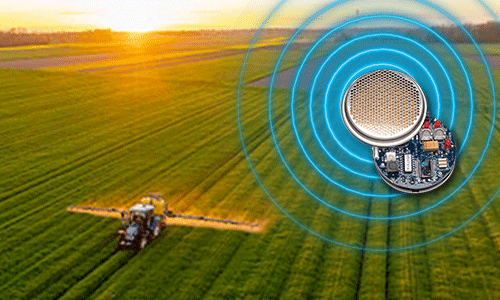
A boom riding too high wastes chemical to drift; too low, and it damages the crop itself, so the sensor’s read has to hold steady across a field that’s rarely uniform. Compact leaves, patchy stands, and irregular crop height scatter the return signal in ways that make this a harder read than it looks. SensComp’s electrostatic ultrasonic sensors have approximately 40 dB greater sensitivity, enabling reliable canopy detection while maintaining stable performance across temperatures from -40°C to +85°C.

Liquid tank level monitoring
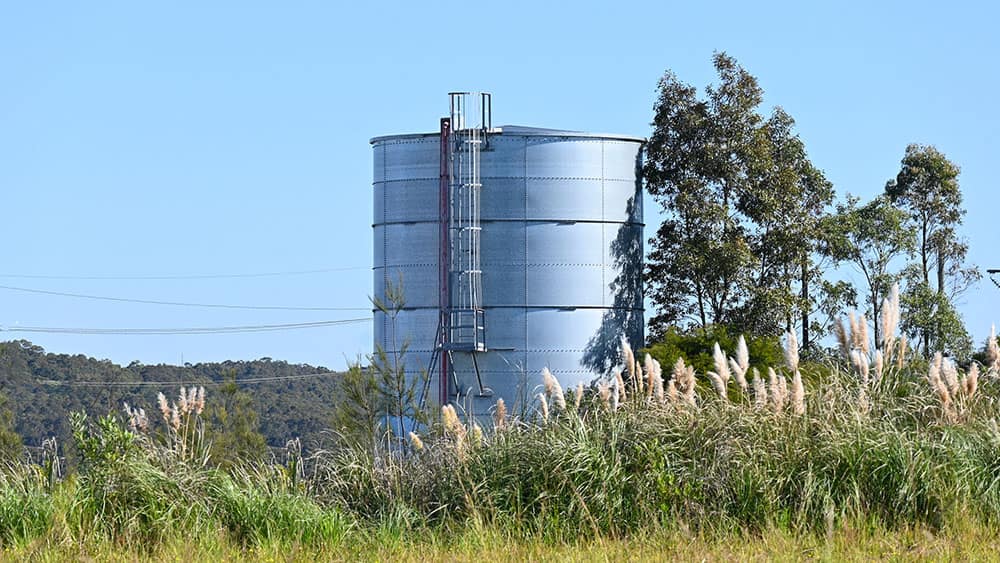
Irrigation tanks, chemical tanks, and other liquid stores on a farm don’t need to run on different sensor hardware from solid storage. A single SensComp electrostatic ultrasonic transducer covers 1 inch to over 40 feet with appropriate drive electronics and has approximately 40 dB greater receive sensitivity than piezo alternatives. It reliably detects calm, reflective liquid surfaces as well as turbulent or foamy liquids that challenge many ultrasonic sensors. One sensor technology can cover every tank on the property.
Grain bin level sensing
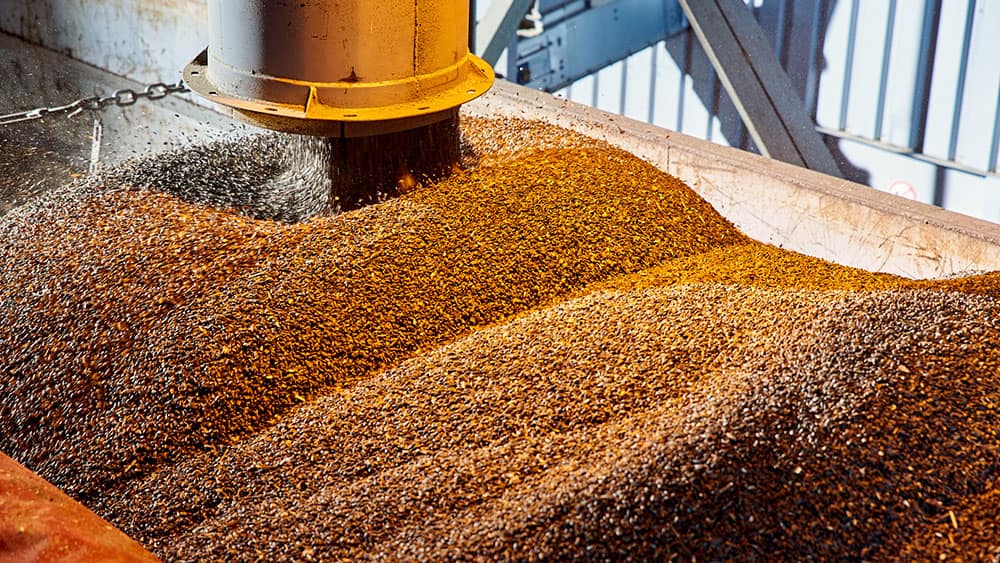
Dust, condensation, and an uneven pile surface make grain one of the tougher targets to read. It’s a soft, irregular, acoustically absorbent material that scatters or absorbs a pulse rather than reflecting it cleanly. It’s exactly the condition where piezoelectric sensors tend to drift, misread, or lose the signal outright. The same SensComp electrostatic transducer used on the farm’s liquid tanks reads grain and other solid bin contents just as reliably, so you don’t need separate sensor hardware.
Irrigation system monitoring
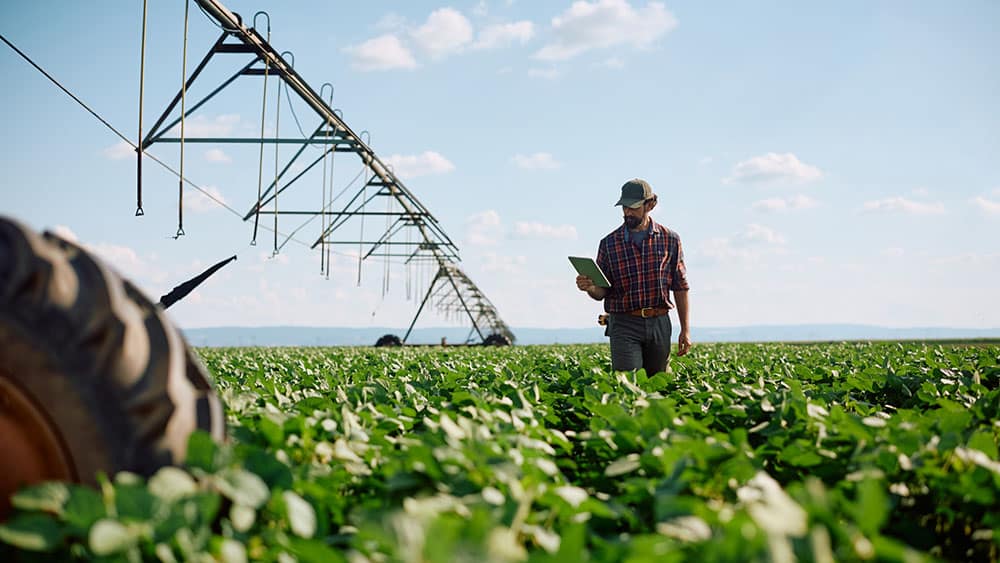
Automated irrigation systems are only as reliable as the level data they receive. SensComp’s electrostatic ultrasonic sensors provide high-fidelity, non-contact level measurement with frequency and gain stability from -40°C to +85°C, helping maintain accurate readings throughout the day when piezoelectric sensors can drift as temperatures change. That stability is what lets an automated system trust the number it’s getting rather than over- or under-correcting.
Agriculture analytics
Agriculture analytics depend on measurements that stay comparable over time — a reading taken at 6 a.m. has to mean the same thing as one taken at 3 p.m. SensComp’s electrostatic ultrasonic sensors provide continuous, non-contact distance data: boom height, tank level, bin inventory, machine position. Controllers and telemetry systems log whatever the OEM or grower programs them to track. Frequency- and gain-stable operation from -40°C to +85°C keeps that record consistent, so a trend line reflects what changed in the field instead of sensor drift.


Additional Resources

FAQs
Crop canopy, grain, and foliage are soft, irregular, acoustically absorbent targets that scatter or absorb an ultrasonic pulse instead of reflecting it cleanly, which is exactly where standard piezoelectric sensors tend to drift, misread, or lose the return signal. SensComp’s electrostatic ultrasonic sensors have approximately 40 dB greater receive sensitivity than piezoelectric ultrasonic transducers, so they pick up the faint echoes off these irregular surfaces that piezo sensors miss, and their stability from -40°C to +85°C keeps that accuracy consistent from a cool morning to a hot afternoon.
Boom height control depends on the sensor reading canopy accurately; dense leaves, patchy stands, and irregular crop height absorb and scatter the return signal, and a lost echo makes the boom either ride too high (spray drift) or too low (crop damage). SensComp’s electrostatic ultrasonic sensors, which have approximately 40 dB greater receive sensitivity than piezoelectric ultrasonic transducers, pick up the faint echoes off crop canopy that other sensors lose, and stable performance from -40°C to +85°C keeps the boom following the field’s actual contour between a cool morning and a hot afternoon spray run.
Yes. A single SensComp electrostatic ultrasonic transducer covers a range from 1 inch to over 40 feet with appropriate drive electronics and have approximately 40 dB greater receive sensitivity than piezoelectric ultrasonic transducers, so it reliably reads both a calm, reflective liquid surface and a soft, absorptive solid pile like grain or feed with the same hardware. That means a farm’s irrigation tank, chemical tank, and grain bin can all run on one sensor technology instead of separate hardware for each, simplifying spares and integration.
Precise irrigation control depends on continuous, accurate level feedback from storage systems to trigger the right release volume. SensComp’s electrostatic ultrasonic sensors provide high-fidelity, non-contact level monitoring that stays frequency- and gain-stable from -40°C to +85°C, unlike piezoelectric options that can drift, giving automated irrigation systems reliable data to balance water volume against actual crop needs as conditions change.
Yes. SensComp’s electrostatic ultrasonic sensors output continuous distance data that machine controllers, PLCs, and telemetry systems can log and timestamp alongside other equipment data. Because frequency and gain stay stable from -40°C to +85°C, readings logged across a full working day remain comparable to each other, unlike piezoelectric ultrasonic sensors that can drift as temperature changes. That consistency is what makes the resulting trend data usable for performance tracking rather than just real-time control.