Richard Bezerko

Richard Bezerko is VP of New Product Engineering at SensComp, where he has continued development of electrostatic ultrasonic sensors and transducers and other sensing technology since the company acquired Polaroid’s OEM Products Division in 2002. He served as SensComp’s president from 2002 to 2014 and has designed ultrasonic sensing products since 1980. He holds a BSEE from Lawrence Technological University and a U.S. patent in thermal fluid chilling.

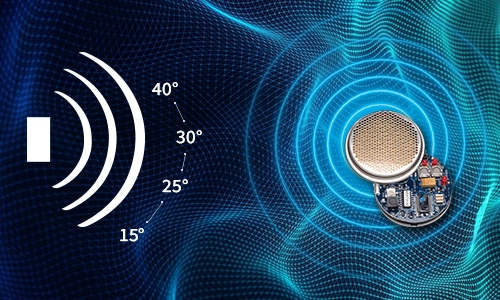
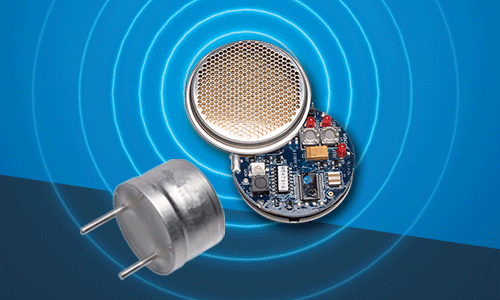
Image of a SensComp electrostatic ultrasonic sensor next to a piezoelectric ultrasonic sensor.

Applications Where Electrostatic Ultrasonic Sensors Outperform Piezoelectric Sensors

Engineers evaluating ultrasonic sensors usually start in the generic category and assume every ultrasonic device performs about the same. They do not. Electrostatic ultrasonic sensors have approximately 40 dB greater sensitivity than comparable piezoelectric ultrasonic sensors, and that margin changes what the sensor can actually do in the field: longer usable range, reliable returns off small and soft targets, and stable readings as temperature swings. This post covers the specific applications where that difference is decisive, and why piezoelectric ultrasonic sensors may fall short in each.

Applications Where Electrostatic Ultrasonic Sensors Outperform Piezoelectric Sensors Read Post »
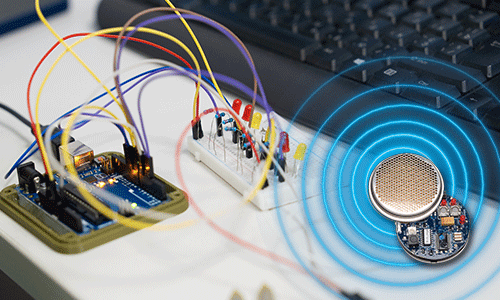
Electrostatic Ultrasonic Sensor Arduino Kit

SensComp’s Ultrasonic Development Kit for Arduino: From Breadboard to Production BOM

A look at how R&D engineers can validate an electrostatic ultrasonic concept on an Arduino® — and carry that work toward a production design without starting the sensing layer over from scratch. Most ultrasonic prototypes start the same way: an engineer grabs whatever $3 ultrasonic module is in the parts drawer, wires it to an

SensComp’s Ultrasonic Development Kit for Arduino: From Breadboard to Production BOM Read Post »

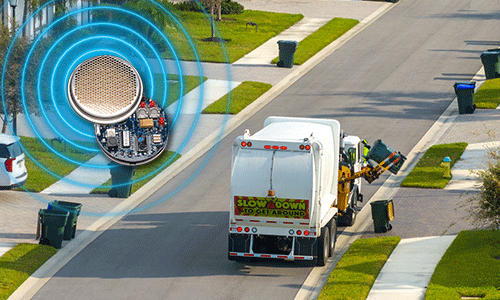
Side-loading garbage truck using electrostatic ultrasonic sensors to pick up carts.

Safe Cart Pickup on Garbage Trucks: Why the Sensing Layer Decides Whether Automation Is an Asset or a Liability

How electrostatic ultrasonic sensing gives automated side loaders — and operator-assisted rear and front loaders — reliable distance data to support cleaner grabs, fewer collisions, and better-informed control and safety logic. A modern residential collection route is one of the most demanding sensing environments in the heavy-equipment world. An automated side loader (ASL) pulls up

Safe Cart Pickup on Garbage Trucks: Why the Sensing Layer Decides Whether Automation Is an Asset or a Liability Read Post »

Shopping Cart
Scroll to Top