
Uncategorized

Aerial view of a farm field with sound waves illustrating electrostatic ultrasonic sensing in agriculture.

Why Piezo Sensors Struggle in the Field: The Engineer’s Guide to Agricultural Sensing

Electrostatic ultrasonic sensing gives agricultural equipment one rugged transducer for boom height control, tank level, and grain bin monitoring: detecting soft crop canopy, holding accuracy from -40°C to +85°C, and surviving chemical spray, in conditions where piezoelectric ultrasonic sensors lose the signal.

Why Piezo Sensors Struggle in the Field: The Engineer’s Guide to Agricultural Sensing Read Post »

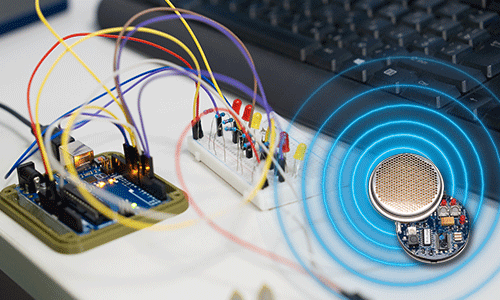
Electrostatic Ultrasonic Sensor Arduino Kit

SensComp’s Ultrasonic Development Kit for Arduino: From Breadboard to Production BOM

A look at how R&D engineers can validate an electrostatic ultrasonic concept on an Arduino® — and carry that work toward a production design without starting the sensing layer over from scratch. Most ultrasonic prototypes start the same way: an engineer grabs whatever $3 ultrasonic module is in the parts drawer, wires it to an

SensComp’s Ultrasonic Development Kit for Arduino: From Breadboard to Production BOM Read Post »

Side loading garbage truck using sensors to pick up bons

Safe Cart Pickup on Garbage Trucks: Why the Sensing Layer Decides Whether Automation Is an Asset or a Liability

How electrostatic ultrasonic sensing gives automated side loaders — and operator-assisted rear and front loaders — reliable distance data to support cleaner grabs, fewer collisions, and better-informed control and safety logic. A modern residential collection route is one of the most demanding sensing environments in the heavy-equipment world. An automated side loader (ASL) pulls up

Safe Cart Pickup on Garbage Trucks: Why the Sensing Layer Decides Whether Automation Is an Asset or a Liability Read Post »

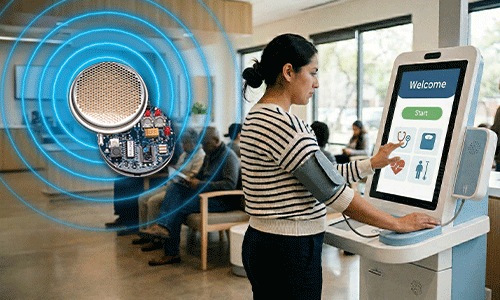
Reliable Patient Presence Detection at Self-Service Health Screening Kiosks

Self-service health screening kiosks are showing up in pharmacies, employer wellness centers, urgent care lobbies, and telehealth stations. They measure blood pressure, weight, BMI, temperature, and other vitals without requiring a staff member to operate them. The concept works — until the kiosk can’t tell whether someone is actually standing in front of it. Patient

Reliable Patient Presence Detection at Self-Service Health Screening Kiosks Read Post »

How to Reduce False Ultrasonic Sensor Readings in Noisy Environments

Using ultrasonic sensors in noisy environments can cause the sensor to detect false ultrasonic signals created by whistles, brakes, animals, machinery and other sources.  One method to minimize this problem is to use a multifrequency ultrasonic transmission chirp.  SensComp’s 600 series electrostatic transducers can be used for this application.  Unlike piezo transducers that operate at

How to Reduce False Ultrasonic Sensor Readings in Noisy Environments Read Post »

Image of a SensComp electrostatic ultrasonic sensor next to a piezoelectric ultrasonic sensor.

Electrostatic Ultrasonic Sensors vs. Piezo Sensors: Which One is Better for My Application?

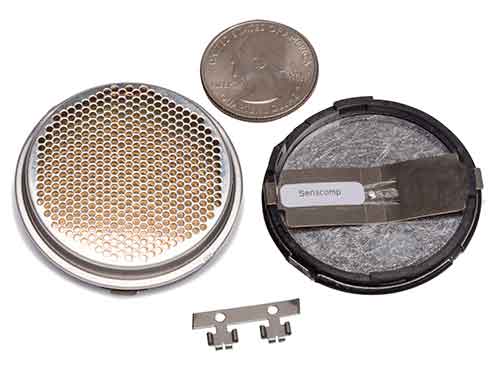
When most engineers think about in-air ultrasonic sensing, they picture a cheap, ceramic “hockey puck” — a piezoelectric transducer. But piezo is not the only option, and not always the right choice. Electrostatic ultrasonic sensors use a different transduction mechanism that delivers higher sensitivity, wider bandwidth, and more stable performance in demanding in-air applications. How

Electrostatic Ultrasonic Sensors vs. Piezo Sensors: Which One is Better for My Application? Read Post »

Shopping Cart
Scroll to Top